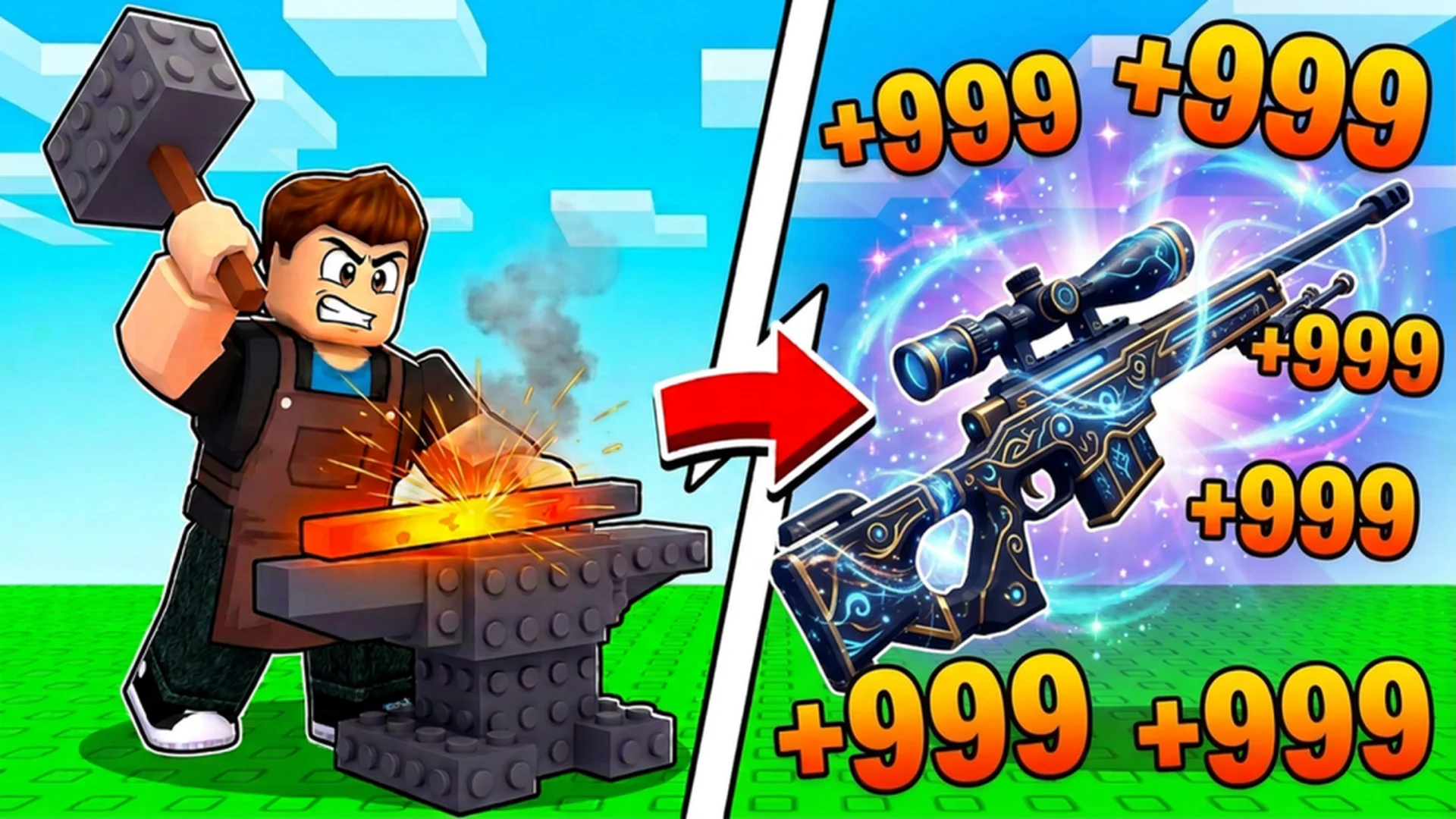
- Gun Forge guide: Follow the ore-to-weapon loop to build power efficiently.
- Early priority: Increase capacity and movement speed before making long gathering trips.
- Forge strategy: Smelt collected materials, compare weapon power, and replace weaker gear.
- Training method: Use stronger weapons and auto-training to prepare for rebirths.
- Progression goal: Reach the first rebirth, then work toward the next level requirement.
Gun Forge Guide: Understand the Core Loop
Gun Forge uses a clear progression cycle: enter the combat area, collect materials, return when your bag is full, smelt those materials, equip the strongest weapon, sell weaker gear, and train for the next rebirth. This loop is the foundation of early progression and gives every upgrade a practical purpose.
The first objective is not to chase every available feature. Instead, focus on making each trip more productive. A larger backpack lets you carry more materials, while better movement speed reduces the time spent traveling between the gathering area and the lobby. These improvements compound as your weapon power increases.
Video Highlights:
- Collecting ore and other materials in the combat zone
- Returning to the lobby when capacity is reached
- Smelting resources into weapons
- Selling weaker equipment and upgrading the backpack
- Training automatically before attempting rebirth
| Activity | Main purpose | Best time to use |
|---|---|---|
| Gather materials | Fill the backpack with ore and resources | At the start of each farming trip |
| Smelt materials | Convert resources into weapons | Whenever the bag is full or a new weapon is needed |
| Sell equipment | Turn unused weapons into money | After comparing weapon power |
| Train | Increase progress toward rebirth | After equipping your strongest weapon |
| Rebirth | Reset training progress for further advancement | When the current requirement is met |
Gather
- Follow the marked route into the resource area.
- Collect ore until your capacity is nearly full.
- Return before a trip becomes inefficient.
Forge
- Use collected materials at the furnace.
- Enable auto-smelting when it saves time.
- Check the resulting weapon before replacing gear.
Train
- Equip the weapon with the highest useful power.
- Use automatic training when available.
- Monitor progress toward the next rebirth.
Your first upgrade should support faster future trips. Capacity and movement speed usually provide more immediate value than spending every coin on minor improvements.
Step-by-Step Farming and Forging Route
The most reliable early route is built around short, repeatable cycles. Do not remain in the resource area after your backpack reaches its limit. A full bag signals that the current run has achieved its purpose, so return to the lobby and convert those materials into progress.
Use the following sequence whenever you begin a new farming cycle:
Enter the Resource Area
Follow the visible route from the lobby and move toward the ore and material nodes. Prioritize resources that are easy to collect and avoid spending too much time on distant targets during the opening phase.
Fill the Backpack
Gather materials until the capacity limit is reached or nearly reached. Keep track of the remaining space so you can decide whether one more nearby resource is worth collecting.
Return to the Lobby
Travel back as soon as the bag is full. Movement speed becomes increasingly valuable here because every farming cycle includes a return trip.
Smelt at the Furnace
Place the collected materials into the furnace and use the available automatic option when appropriate. The goal is to transform raw resources into a weapon that improves your next training session.
Compare, Equip, and Sell
Open the backpack, compare the new weapon with your current equipment, equip the stronger option, and sell gear that no longer contributes to your progression.
| Route stage | Decision rule | Result |
|---|---|---|
| Resource entry | Choose nearby, accessible materials first | Faster first cycle |
| Backpack management | Stop at the capacity limit | No wasted gathering time |
| Lobby return | Leave when the bag is full | Resources become usable sooner |
| Furnace use | Smelt the gathered materials | Chance to create stronger equipment |
| Inventory review | Compare weapon power directly | Better training performance |
A short cycle that you can repeat consistently is more valuable than a long trip that leaves you far from the furnace, shop, and training areas.
Forge Better Weapons Without Wasting Materials
The furnace is the main bridge between gathering and combat power. Raw stones, ore, coal, and similar materials are not the final goal; they are inputs used to create equipment. Once a weapon is produced, inspect its power before deciding whether it should replace your current item.
Weapon strength can change the pace of training significantly. A weak weapon may still be useful for selling, but keeping it equipped after a stronger option is available slows the entire progression loop. Make inventory checks part of every return to the lobby.
The basic forge workflow is:
- Gather a full or nearly full backpack of materials.
- Return to the furnace.
- Smelt the materials automatically or manually.
- Open the backpack after crafting finishes.
- Compare the new weapon against the equipped item.
- Equip the stronger weapon and sell the weaker one if money is needed.
| Inventory choice | Recommended action | Reason |
|---|---|---|
| New weapon has higher power | Equip it immediately | Faster training and stronger progression |
| New weapon has lower power | Keep current weapon | Avoid weakening your training setup |
| Several weak weapons | Sell selected extras | Convert unused gear into upgrade money |
| Backpack is too small | Upgrade capacity | Carry more materials per trip |
| Weapon is strong but travel is slow | Upgrade movement speed | Reduce repeated return time |
When a new weapon gives a major power increase, return to training instead of continuing to gather immediately. The purpose of forging is to improve the next stage of progression, so take advantage of the upgrade before starting another resource run.
A weapon may look newer without being stronger. Always compare its displayed power with your equipped item before changing your loadout.
Upgrades, Auto Features, and Rebirth Planning
Gun Forge rewards players who improve the entire loop rather than focusing on a single statistic. Backpack capacity, movement speed, weapon power, and training progress all interact. A larger bag increases the value of each trip, while faster movement makes those trips less time-consuming.
Automatic features can also reduce repetitive input. Auto-gathering or auto-combat functions may help clear enemies and collect materials while you focus on route management. Automatic training is especially useful once your weapon power is high enough to make steady progress.
| Upgrade or feature | What it improves | Priority |
|---|---|---|
| Backpack capacity | Materials carried per trip | High during early farming |
| Movement speed | Travel between areas | High after capacity improves |
| Weapon power | Training efficiency | Highest after each successful forge |
| Auto combat | Repetitive enemy encounters | Useful when available |
| Auto training | Hands-free training progress | Useful before rebirth |
| Rebirth access | Long-term progression | Use after meeting the requirement |
Rebirth should be treated as a planned checkpoint rather than an interruption. The first rebirth becomes available after sufficient training, and later rebirths require additional progression. Before resetting, make sure you have used your strongest practical weapon and completed any nearby tasks that can provide useful rewards.
A simple rebirth plan looks like this:
- Upgrade capacity when repeated trips end too quickly.
- Improve movement speed when travel becomes the main delay.
- Forge a stronger weapon before extended training.
- Use auto-training when it maintains steady progress.
- Rebirth after reaching the required milestone.
- Rebuild your setup with the improved progression path.
Before rebirth, finish easy quests, collect available rewards, and confirm that your strongest weapon is equipped. This keeps the reset from interrupting unfinished preparation.
Progression Checklist and Practical Priorities
The early game becomes easier when each return to the lobby has a purpose. Use one visit to smelt, inspect weapons, sell unused gear, claim available rewards, and choose the next upgrade. This prevents unnecessary backtracking and keeps the progression loop organized.
Quests, daily objectives, challenges, update rewards, and event-related rewards can provide additional resources. Check for visible quest markers and claim completed rewards before leaving the lobby. These rewards may include money, potions, tickets, or other useful items, but their exact availability can change with updates.
Early Progression Goals:
- Complete the first gathering cycle and return to the lobby
- Smelt collected materials into a usable weapon
- Equip the strongest weapon in the backpack
- Upgrade capacity or movement speed when travel becomes inefficient
- Reach the first rebirth milestone and prepare for the next requirement
| Milestone | What to check | Why it matters |
|---|---|---|
| First full backpack | Capacity and return route | Establishes the farming rhythm |
| First forged weapon | Power compared with equipped gear | Determines the next training pace |
| First inventory sale | Unused equipment identified | Provides money for practical upgrades |
| First auto-training session | Progress increases consistently | Reduces repetitive manual input |
| First rebirth | Requirement is complete | Opens the next stage of progression |
For New Players
- Follow the marked path.
- Collect nearby materials.
- Use the furnace after every full trip.
For Faster Progress
- Upgrade capacity and speed.
- Replace weapons quickly.
- Keep auto-training active when practical.
Before Rebirth
- Claim completed rewards.
- Equip the strongest weapon.
- Confirm the next requirement.
Treat the lobby as your command center: claim rewards, forge weapons, sell obsolete gear, upgrade movement tools, and then return to the field.
Gun Forge FAQ
Q: What is the best early strategy in Gun Forge?
Repeat the full progression loop: gather materials, return when the backpack is full, smelt a weapon, equip the strongest result, sell weaker gear, and train toward rebirth.
Q: Should I upgrade capacity or movement speed first?
Choose capacity when the bag fills too quickly, and choose movement speed when travel takes most of the cycle. Both upgrades support repeated farming.
Q: How do I know which weapon to equip?
Open the backpack and compare the displayed power of each weapon. Equip the item with the higher useful power rather than choosing based on appearance.
Q: When should I attempt a rebirth?
Attempt rebirth after meeting the required training milestone and preparing your inventory. Claim available rewards and equip your strongest practical weapon before resetting.
The strongest early habit is consistency: gather efficiently, forge often, compare weapon power, improve travel time, and train with a clear rebirth target.